What Is the Dutch Government’s "Red Line" for Iran? Mithra Foundation as the advocate for Iranian diaspora inside the Netherlands demands transparent and public answers from Prime Minister Jetten and his cabinet.
To Prime Minister Rob Jetten,
On 25 September 2026, you met the President of the Islamic Republic regime, Masoud Pezeshkian on the sidelines of the UN General Assembly in New York—the first meeting between a Dutch prime minister and a president from Islamic Republic in 12 years. According to the Iranian account, you discussed bilateral relations, regional security and closer cooperation, and agreed to maintain regular diplomatic consultations [1], which you also confirmed in your X post [2]. The meeting shocked many Iranians and Iranian-Dutch citizens, particularly amid one of the largest massacres of civilians in modern history, followed by continuing executions. For nine months, thousands of Iranians and allies have taken to the streets almost weekly, calling on the Dutch government to stand with them and sever diplomatic ties with the regime, but have been largely ignored. This is especially concerning given the regime’s recent creation of Alaj, reportedly designed to identify and target Iranian freedom fighters abroad, including in the Netherlands [3]. What did you raise with President Pezeshkian about the Iranian people killed, executed, tortured and imprisoned by the state he represents? How do you see diplomacy as “the only path to a sustainable solution” [2] with a regime responsible for this level of violence, which can be justifiably compared to the Holocaust? On behalf of Iranian refugees and other Iranians fighting for freedom in the Netherlands, we respectfully demand clear and transparent answers to the following questions.
Why did Prime Minister Rob Jetten find it necessary to meet with an official from the Islamic Republic regime at this level, after the brutal massacre, current executions of Iranian civilians, and targeting Iranian diaspora in EU?
Tens of thousands of civilians killed and justified as ‘armed forces’
The January 2026 uprising was met with a massive state crackdown. Initial estimates of those killed ranged from 20,000 to 43,000, based on Amnesty International, the UN Special Rapporteur on Iran, TIME’s reporting from senior Iranian health officials and hospital records, and the International Centre for Human Rights in Iran [4–6]. The toll may have been higher given protests in more than 400 cities. Even the regime’s own unverified estimate of approximately 3,000 deaths represents a massacre. Authorities simultaneously imposed what Amnesty describes as the longest internet shutdown ever imposed by the authorities, beginning 8 January and severely hindering documentation of the killings [4]. Pezeshkian later said some demonstrators were armed [7], while Amnesty documented security forces firing rifles and shotguns at protesters, including from rooftops, and described mass unlawful killings [4]. Human Rights Watch documented protesters subsequently executed for vague national-security offences, including blocking streets and damaging public property, often without any allegation of killing [8].
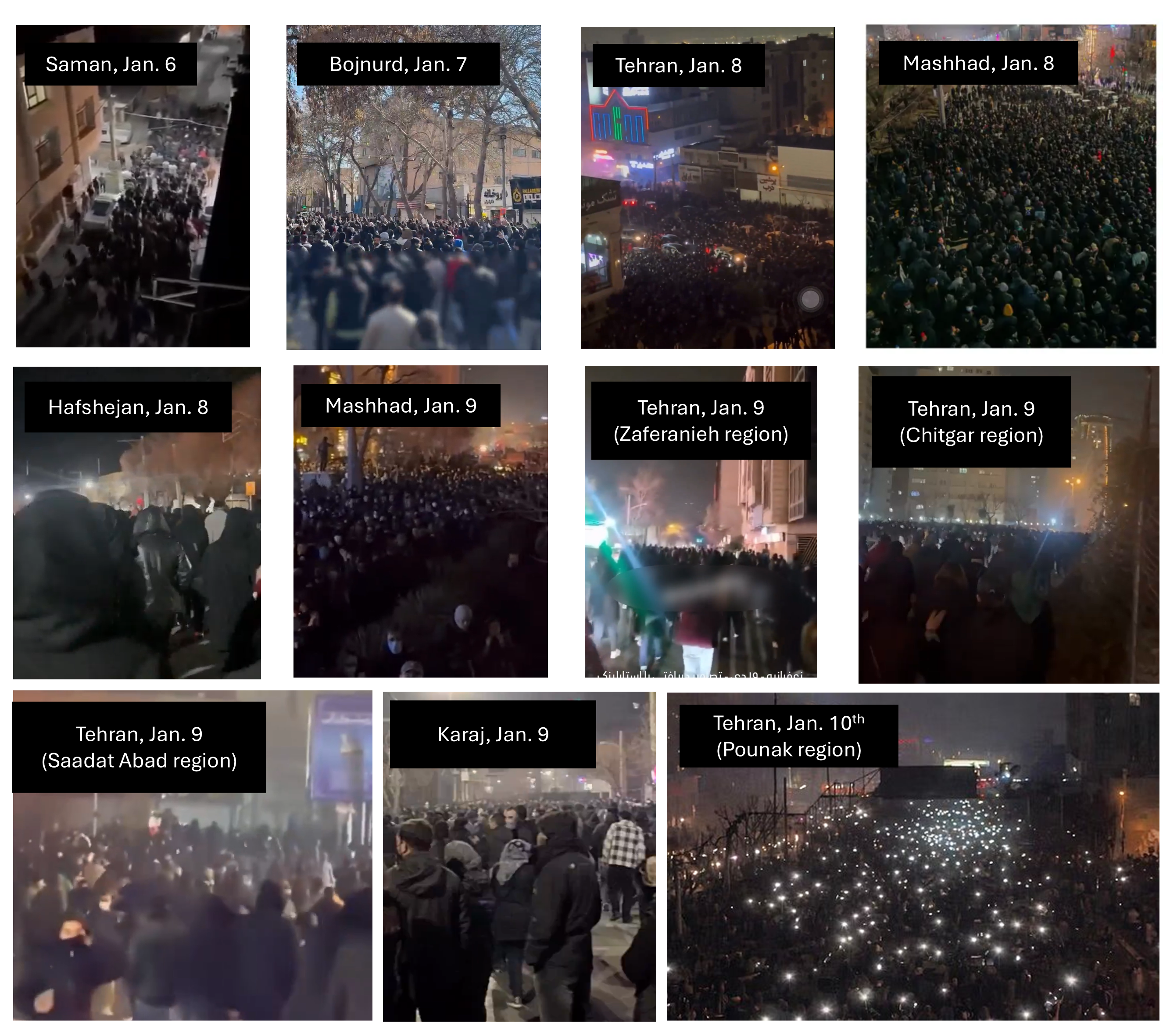
More than 400 cities across Iran joined the protests in January. On January 8, after the internet was shut down, only a limited number of videos emerged from large cities that still had access to Starlink. Many other videos were lost because protesters were killed or detained by the regime (Source: grass-root journalism by Iranian accounts on X).
On 16 September, Amnesty Secretary General Agnès Callamard said Amnesty had established that Iranian authorities committed crimes against humanity during the suppression of the uprisings, identified 87 officials for investigation, and called for an international criminal justice mechanism for Iran [9]. Prime Minister Jetten, did you challenge Pezeshkian on the killings, the information blackout, the refusal of an independent investigation, and international accountability for those responsible?
Executions continue
Iran Human Rights recorded at least 528 executions during the first eight months of 2026, including 31 protesters, 29 of whom were arrested in connection with the January protests [10]. Human Rights Watch separately documented 29 people connected to the recent protests executed between 18 March and the end of August, including teenagers, with several executions carried out publicly [8]. Human-rights organisations have also reported that the broader number of executions in 2026 has now exceeded 1,000 [11]. Amnesty has documented the increasing use of the death penalty to crush dissent and instil fear, as well as the judiciary’s January order to prosecutors to expedite protesters’ trials [4]. Several cases illustrate this repression. Erfan Mirzaei, a 21-year-old rapper and singer arrested after the January protests, was executed on 6 September after being sentenced to death, amid reports of torture and severe mistreatment in detention [12]. Ali Zarei, who was shot in the eye by Islamic Republic security forces during the 2022 Mahsa Amini uprising and blinded in one eye, was later arrested after returning to Iran for medical treatment and sentenced to death in connection with his political activities [13]. The Rahimi twins, Taraneh and Romina, were arrested after the January protests; reports alleged torture, abuse and forced confessions. Taraneh was sentenced to death and Romina to 25 years in prison [14,15], with European Parliament President Roberta Metsola publicly highlighting their cases [16].
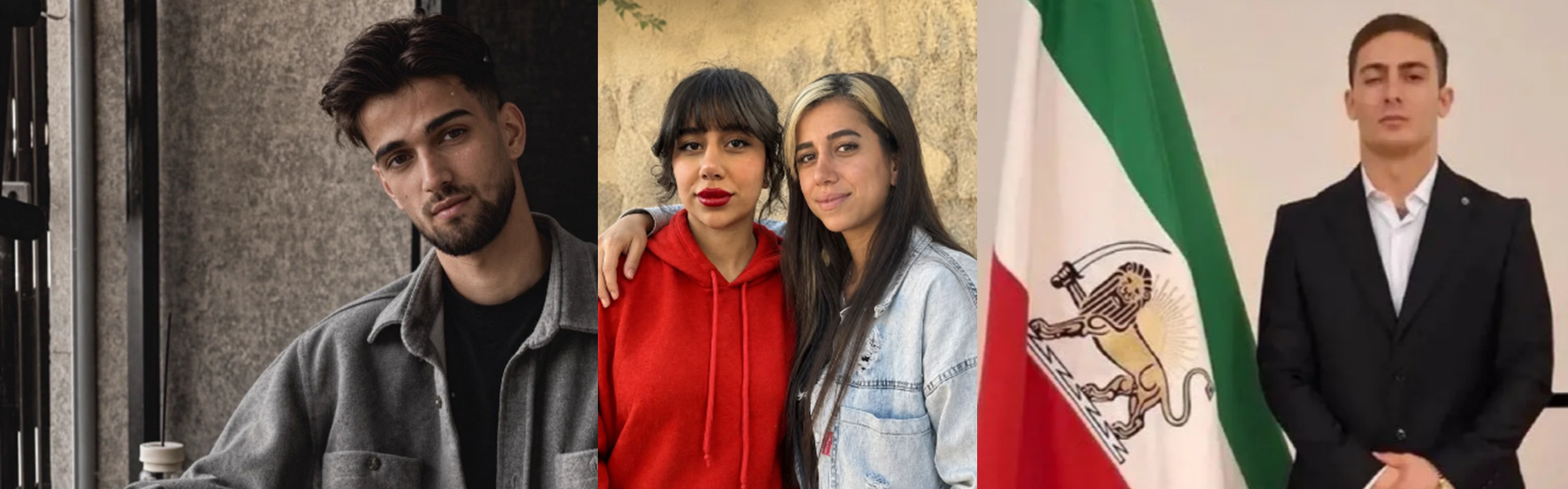
A few out of many people sentenced to death by the regime Pezeshkian represents, who got some internal media attention; from left: Erfan Mirzaei (executed), the Rahimi sisters (sentenced), Ali Zarei (sentenced and imprisoned in solitary confinement).
These are only the cases that have received some media attention. But there are hundreds or thousands of people on death row whose names never make international headlines — people who may remain completely unknown to the outside world until the day they are hanged. Did you ask Pezeshkian about Erfan, Romina and Tarane, Ali, and the rest of Iranians executed or on the death row?
Pezeshkian is not an outside observer
Contrary to attempts by some EU officials to portray Pezeshkian and similar regime officials as separate from the wider regime, Pezeshkian remains closely connected to Iran’s governing and security institutions. In July, he congratulated Judiciary Chief Gholam-Hossein Mohseni Ejei on his reappointment and stressed closer cooperation between the executive and judicial branches [17]. Ejei heads the judiciary, which has overseen the prosecution and execution of protesters; Amnesty documented his January order for prosecutors to show “no leniency” towards protesters and expedite their trials [4]. Pezeshkian has also acknowledged that the IRGC and Ministry of Intelligence were consulted in forming his cabinet and that their agreement was obtained before the final list was presented [18]. In his Fox News interview, he further stated that he meets and consults Khamenei [7], the regime’s Supreme Leader and commander-in-chief of the IRGC, which is now on the EU’s official terrorist list. So when you met President Pezeshkian, did you ask about his government’s relationship with the judiciary, the IRGC and Khamenei, and their role in the accelerated prosecution and execution of protesters?
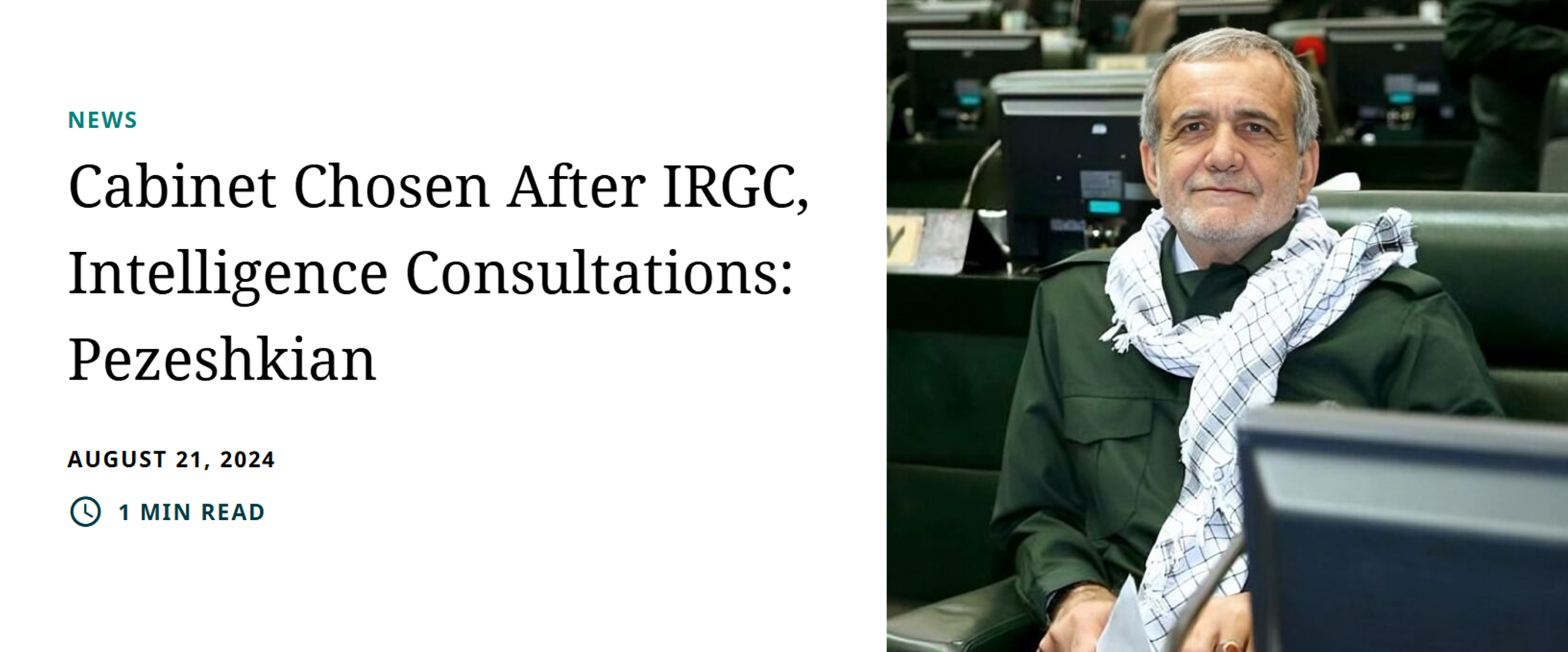
Pezeshkian works closely with IRGC [18] and he even wore the IRGC uniform to show his full support of them. At the same time IRGC is now officially on the EU terror list. So how can EU officials like PM Jetten meet with their representatives?
LGBTQ+ Iranians
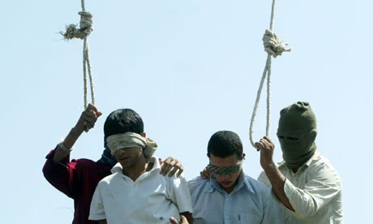
Public execution of Iranian teenagers Mahmoud Asgari and Ayaz Marhoni in Mashhad for same-sex relationship (what Sharia law calls lavat). (Source: Guardian).
Iran’s legal system criminalises same-sex sexual relations between both men and women, with severe corporal punishment and, in specified circumstances, the death penalty [19]. Iran has also carried out executions for conduct prosecuted as lavat: Human Rights Watch documented the public hanging of two men for homosexual conduct in 2005, while The Independent reported the execution of three men for sodomy in 2011 [20,21]. This is not merely historical. The legal framework remains in place. In 2022, Zahra Sedighi-Hamadani (Sareh) and Elham Choubdar were sentenced to death for “corruption on earth” in a case linked to their LGBTI activism; Sareh was also accused of “promoting homosexuality.” Iranian authorities framed the case as alleged trafficking of women and girls, while human-rights organisations disputed these allegations and documented the connection to their LGBTI activism [22–24]. For LGBTQ+ Iranians seeking protection from such persecution, this is also a Dutch issue: many have sought asylum in the Netherlands because of persecution and criminalisation based on sexual orientation or gender identity. Prime Minister Jetten, how can a Dutch Prime Minister who has publicly championed LGBTQ+ equality meet the political leadership of a state that criminalises LGBTQ+ people, while LGBTQ+ Iranians seek protection in the Netherlands from that persecution? Did you consider them when meeting with Pezeshkian?
Nine Months of Iranian Protests in the Netherlands
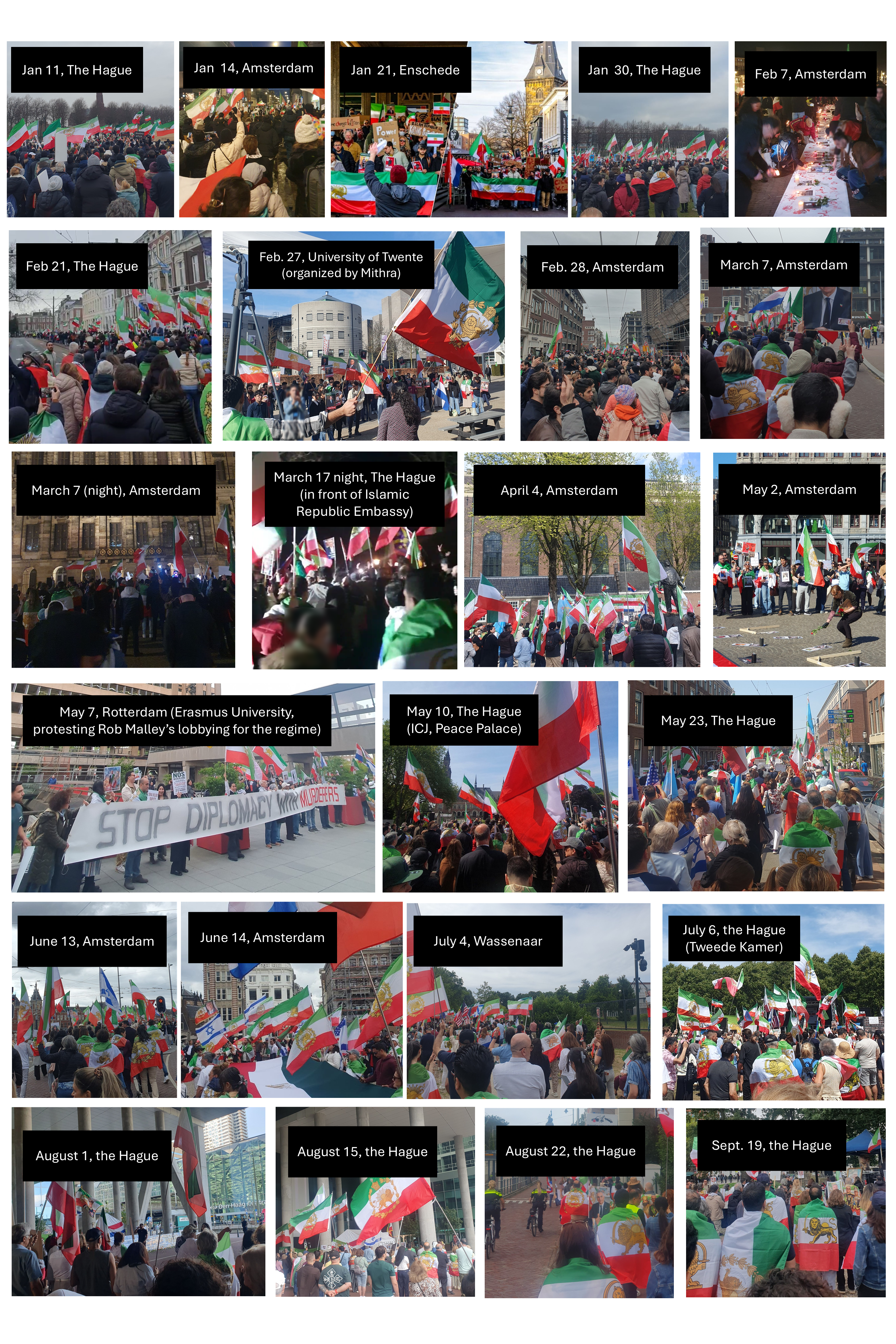
Iranian migrants and Iranian-Dutch citizens have been on the streets for months, demanding support from the Dutch government, where is the support? When will the ignorance of our cries end? Selected cases from tens of demonstrations.
Since the January crackdown, Iranian communities in the Netherlands have repeatedly taken to the streets, including outside the Iranian Embassy in The Hague. Dutch authorities themselves summoned the Iranian ambassador in January over violence against peaceful demonstrators, mass arbitrary arrests and the internet blockade [25]. In June, the Netherlands joined 23 other countries in condemning threats and hostile actions by Iranian security services against dissidents, journalists and others abroad, including attempts to kill, kidnap, harass or intimidate people on European soil [26]. In September, the Islamic Republic launched Alaj, a platform asking people to identify and report opponents living abroad [3]. The Iranian Embassy in the Netherlands operates in alignment with the regime’s policies inside Iran and has access to information about Iranian protesters living in the country. Protesters have repeatedly called for stronger Dutch action, including reconsidering diplomatic relations and reducing the Iranian Embassy to an Interest Section. Prime Minister Jetten, did you discuss with Pezeshkian the safety of Iranian-Dutch citizens and migrants who have protested for months, the activities of the Iranian Embassy, and the continuing threat of transnational repression—and what concrete protection can Iranian activists in the Netherlands expect from your government?
Where is the Dutch red line for Iran?
There is another question that many Iranians in the Netherlands cannot ignore. You and D66 have repeatedly participated in the Rode Lijn demonstrations concerning Gaza. D66 described this mobilisation as a political signal that politicians cannot simply look away from violence, and the demonstrations drew tens of thousands of people [27]. If mass civilian suffering requires Dutch political leaders to draw a red line, what is the red line when tens of thousands of Iranians are killed, protesters are executed, young women are sentenced to death, LGBTQ+ people remain criminalised, and Iranian dissidents in Europe are targeted? And finally: When you sat across from President Pezeshkian on 25 September, what did you think of saying to the Iranians living in the Netherlands who have spent the past nine months on the streets asking their government not to look away? Mithra (Lion and Sun Stichting – Netherlands), as an organisation advocating for Iranians living in the Netherlands, is deeply disappointed by your government’s approach to a regime that continues to kill Iranian citizens and target dissidents in Europe and the Netherlands. We believe these questions deserve transparent and public answers, and we demand accountability from you and your cabinet. Mithra’s board remains open to meeting with you to discuss these crucial issues directly.
References
[1] Tasnim News Agency. Pezeshkian: US Must Honor Commitments for Dialogue, 25 September 2026; and Rob Jetten’s X post, 24 September 2026. https://www.tasnimnews.ir/en/news/2026/09/25/3705569/pezeshkian-us-must-honor-commitments-to-dialogue/amp
[2] Rob Jetten’s Official Tweet. September 24, 2026. https://x.com/MinPres/status/2103220868579029054
[3] Iran International. Islamic Republic asks public to identify opponents abroad, 15 September 2026. https://www.iranintl.com/en/202609154229
[4] Amnesty International. What happened at the protests in Iran?, 26 January 2026. https://www.amnesty.org/en/latest/campaigns/2026/01/what-happened-at-the-protests-in-iran/
[5] TIME. More Than 30,000 Killed in Iran, Say Senior Officials, 25 January 2026. https://time.com/7357635/more-than-30000-killed-in-iran-say-senior-officials/
[6] International Centre for Human Rights in Iran. Latest Human Rights Report: 43,000 Killed in the Crackdown on Protests in Iran, 20 January 2026. https://humanrightsintl.com/2026/01/20/latest-human-rights-report-43000-killed-in-the-crackdown-on-protests-in-iran-for-immediate-release/
[7] Fox News. Iran’s president responds to death toll claims from January protests, says some demonstrators were armed, 24 September 2026. https://www.foxnews.com/video/6405590740112
[8] Human Rights Watch. Iran: Ongoing Unlawful Execution Campaign Against Protesters, 10 September 2026. https://www.hrw.org/news/2026/09/10/iran-ongoing-unlawful-execution-campaign-against-protesters
[9] Amnesty International. 16 September 2026, Iran: Architects of crimes against humanity to suppress protests must face justice. https://www.amnesty.org/en/latest/news/2026/09/iran-architects-of-crimes-against-humanity-to-suppress-protests-must-face-justice/
[10] Iran Human Rights. 31 protesters executed since March 18, including 29 arrested in connection with January protests; at least 100 protesters at risk of execution, September 2026. https://www.iranhr.net/en/print/5/9033/
[11] United Nations Human Rights Council. 63rd Session, statement reporting more than 1,000 executions in Iran in 2026. https://transcripts.un.org/en/hrc/63/17
[12] Iran Human Rights. Reporting on Erfan Mirzaei’s execution, September 2026. https://www.iranhr.net/en/articles/9018/
[13] IranWire. Reporting on Ali Zarei, the 2022 Mahsa Amini uprising protester who was shot in the eye and later sentenced to death. https://iranwire.com/en/news/157026-death-sentence-issued-for-injured-protester-ali-zarei/
[14] The Guardian. Broken feet, ripped-out hair and now a death sentence: the fate of twin sisters jailed over Iran protests, 6 September 2026. https://www.theguardian.com/world/2026/sep/06/taraneh-romina-rahimi-twin-sisters-jailed-over-iran-protests
[15] The Wall Street Journal. The Twin Sisters Facing the Wrath of Iran’s Crackdown, September 2026. https://www.wsj.com/world/middle-east/the-twin-sisters-facing-the-wrath-of-irans-crackdown-81adce68
[16] European Parliament. President Roberta Metsola, statement concerning Iranian protesters and the Rahimi sisters, September 2026. https://the-president.europarl.europa.eu/en
[17] Tasnim News Agency. 6 July 2026, Iran President Congratulates Judiciary Chief on Reappointment. https://www.tasnimnews.ir/en/news/2026/07/06/3640913/iran-president-congratulates-judiciary-chief-on-reappointment
[18] IranWire. 21 August 2024, Cabinet Chosen After IRGC, Intelligence Consultations: Pezeshkian. https://iranwire.com/en/news/133088-cabinet-chosen-after-irgc-intelligence-consultations-pezeshkian/
[19] UK Home Office. Country Policy and Information Note: Sexual Orientation and Gender Identity or Expression, Iran, updated August 2026. https://www.gov.uk/government/publications/iran-country-policy-and-information-notes/country-policy-and-information-note-sexual-orientation-and-gender-identity-or-expression-iran-june-2022-accessible
[20] Human Rights Watch. Iran: Two More Executions for Homosexual Conduct, 21 November 2005. https://www.hrw.org/news/2005/11/21/iran-two-more-executions-homosexual-conduct
[21] The Independent. Iran executes three men for sodomy, September 2011. https://www.independent.co.uk/news/world/middle-east/iran-executes-three-men-for-sodomy-2350671.html
[22] Amnesty International. 5 September 2022, Iran: Two LGBTI activists sentenced to death in shocking development. https://www.amnesty.org/en/latest/news/2022/09/iran-two-lgbti-activists-sentenced-to-death-in-shocking-development/
[23] ILGA World. 9 September 2022, Iran: Retract death penalty sentence and release LGBTI activists Zahra Sedighi-Hamadani (Sareh) and Elham Choubdar. https://archive.ilga.org/en/Iran-retract-death-penalty-sentence-release-LGBTI-activists-Zahra-Sedighi-Hamadani-Sareh-Elham-Choubdar
[24] Human Rights Watch. 28 August 2012, Codifying Repression: An Assessment of Iran’s New Penal Code. https://www.hrw.org/report/2012/08/28/iran-new-penal-code [25] Government of the Netherlands. Kamerbrief inzake ontbieden Iraanse ambassadeur, 13 January 2026.
https://www.rijksoverheid.nl/documenten/2026/01/13/kamerbrief-inzake-ontbieden-iraanse-ambassadeur [26] Government of the Netherlands. Joint statement on Iranian State Threats, 10 June 2026.
https://www.government.nl/documents/2026/06/10/joint-statement-on-iranian-state-threats-and-hayi-claimed-attacks [27] D66. D66 trekt samen met een kwart miljoen mensen een Rode Lijn. https://d66.nl/nieuws/d66-trekt-samen-met-een-kwart-miljoen-mensen-een-rode-lijn/